

Farmer Paul’s Hydrogen Revolution: The Chant Hydrocell
By Tobias Wedgwood 9th Mar 2026


Farmer Paul's Hydrogen Revolution: The Chant Hydrocell
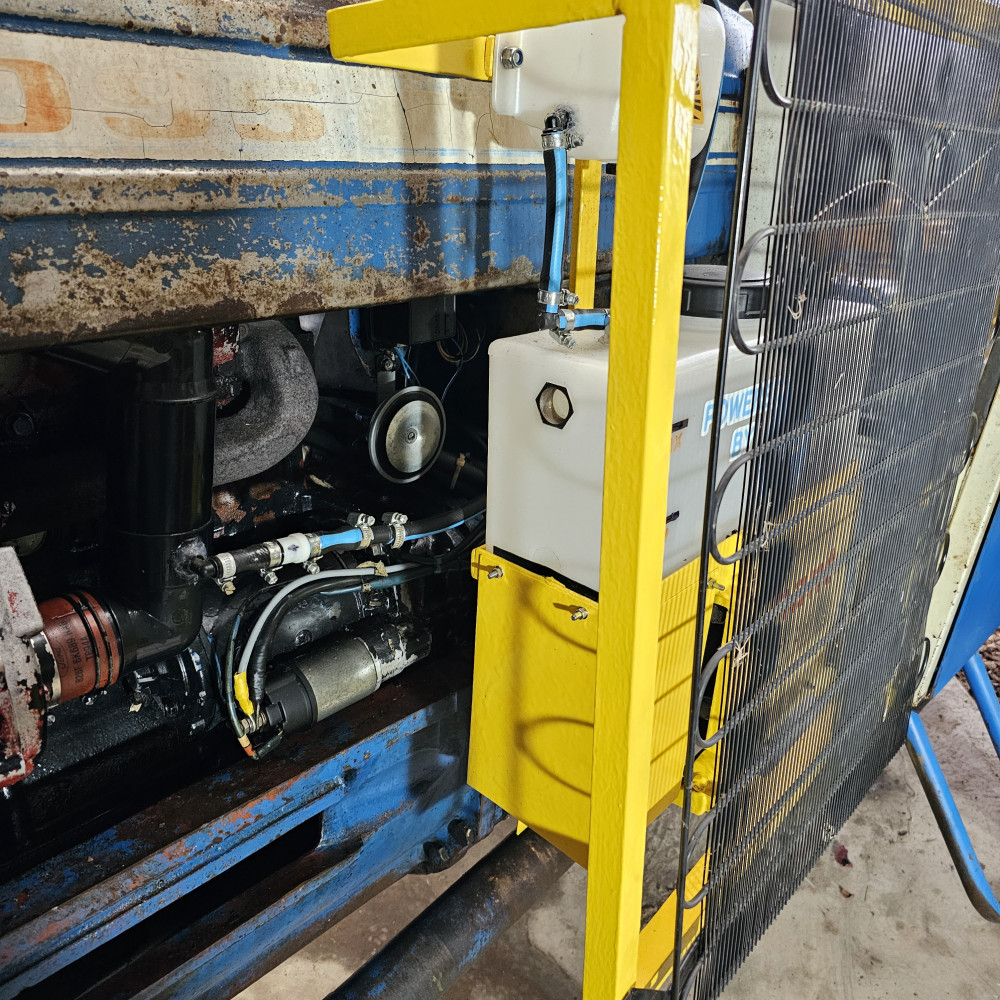
On a quiet, sustainably managed farm, innovation is bubbling, quite literally, from a bucket of water and a set of off-the-shelf components. Paul Chant, known locally as the wonderfully eccentric "Farmer Pauly," has designed and built a hydrogen assist system for his diesel Ford tractor that's turning heads for all the right reasons. He calls it the Chant Hydrocell and it only cost £400.
Unlike flashy green tech start-ups chasing venture capital, the Chant Hydrocell is deliberately low-key and entirely DIY. Built from readily available parts, the unit generates hydrogen gas on demand while the engine is running. The hydrogen is fed directly into the tractor's air intake, where it mixes with diesel during combustion. The result? Paul reports fuel savings of around 33% along with a noticeable boost in power and smoother engine performance.
What makes the system especially appealing is its simplicity and safety. The Hydrocell only produces hydrogen when the engine is running, meaning there is no need to compress or store the gas. Hydrogen storage is often cited as one of the challenges in alternative fuel systems, but Paul's design sidesteps the issue entirely. No storage tanks. No high pressures. Just on-demand production and immediate use.
At the heart of the system is a process called electrolysis. Electrolysis uses electricity to split water (H₂O) into its two elemental components: hydrogen (H₂) and oxygen (O₂). When an electrical current passes through water, typically enhanced with a small amount of electrolyte to improve conductivity, the water molecules break apart. Hydrogen gas forms at the negative electrode (cathode), and oxygen forms at the positive electrode (anode). In Paul's setup, the hydrogen is captured and directed into the engine, while the oxygen is safely vented into the air intake. The tractor's own electrical system powers the process, making it self-contained.
Hydrogen burns more rapidly and cleanly than diesel alone, with a higher temperature which is burnt at a faster rate reducing added engine heat and wear . When introduced in small quantities into a diesel engine, it can improve the efficiency of combustion. More complete combustion means more of the diesel's energy is converted into useful power, and less is wasted as unburned fuel or soot. That improved burn is what likely contributes to both the fuel savings and the power increase Paul observes.
Yet for Paul, this isn't about squeezing extra horsepower out of a machine. It's about stewardship. He and his wife Carla, a holistic horse trainer with a deep respect for natural systems, run their farm with environmental sensitivity at its core. They see the Hydrocell not as a commercial opportunity, but as a contribution. Paul has no intention of patenting the design. In his view, real change happens when practical solutions are shared freely, not locked behind corporate walls.
There is a future project being undertaken which might see a TE20 Ferguson completely running on hydrogen which is not just zero carbon, but actually cleans the air quality up during combustion, if all our vehicles were converted then there would be no air pollution from motor vehicles in our world.
Download our Nub News App!
- It’s FREE and available now- Breaking news notifications
- Your Town in Your Pocket


In a world wrestling with climate concerns and rising fuel costs, the Chant Hydrocell is a reminder that innovation doesn't always come from laboratories or boardrooms. Sometimes it comes from a muddy field, a curious mind, and a deep love for the planet.
Article by Tobias Wedgwood @fatherandsontractors
Download our Nub News App:
- It’s FREE and available now
- Breaking news notifications
- Your Town in Your Pocket

Share: